Free Ground Shipping: one order between $200-$900, call for details
D2356This intimate series of colorful, painterly works expresses a rich sense of the abstract and what nature provides to us in its many forms of a rainbow, from the bark of a beautiful tree to the colors reflected through a winter's window.
This sophisticated collection of small but powerful works was based on an endearing childhood memory of the artist when digging in a natural sandbox of soil while on a camping trip in the Rocky Mountains with her little sister. A day of found rock ledges off the water and playful dirt digging near their cabin revealed a rainbow of discoveries, from brightly colored insects to Indian stones.
Colorful visions are captured in each individual work through thick brushstrokes, soft divisions of the compositions and carefully orchestrated palettes. While as a series they evoke a sense of refreshment and discovery, The Digging for Rainbows collection acts a reminder that rainbows often thought of as only seen in the sky can also be found on earth if we choose to keep our eyes open and memories vivid.
Louisiana native William Guion has photographed the landscape and oaks of the South and West for over 30 years. When he was a photography student in California, one of his instructors gave him advice that he would follow for his entire career. When he asked his instructor how to make more meaningful photographs he said: “find something you love and photograph it again and again. Then, over time, your deep feelings for the thing you love will shine through your photographs”. This is apparent in Bill’s photographs.
Southern Live Oak trees grow in a thin corridor rimming the Gulf of Mexico from Texas to Florida and up the Atlantic Coast into Southeastern Virginia. The limbs stretch long and bend low, even dipping into the ground as though it’s supporting or steadying itself with its limbs. The expression “Live Oak” is derived from the tree’s heartiness and longevity. Its leaves always appear to be green (it’s actually semi-evergreen and sheds its leaves periodically throughout the year, usually growing new leaves simultaneously.) A single live oak can live as long as a half dozen human generations and some of the oldest are more than 500 years of age.
Bill has worked on a photo-documentary of the 100 oldest live oaks in the south- He is locating and recording the 100 oldest member trees in the Louisiana Live Oak Society. He wants to raise awareness for the importance of old, historic trees in our lives. Bill supports the work of groups and organizations that study, care for, and promote the protection of oaks and other historic trees.
Image references:
G2391fSugarmill Oak, Louisiana (G2391) Sugarmill Oak was made at the Raceland sugarcane mill in 2009. The tree is one of three large live oaks growing behind the offices of the Raceland mill, and based on its size (more than 20 feet in circumference), it was likely planted sometime in the mid 1800s. The mill is owned today by the Raceland Raw Sugar Corporation and serves much of the surrounding cane-growing farms around Raceland. At one time the sugar mill was part of the Godchaux Plantation (pronounced god-chaw). It was one of the largest sugarcane plantations in South Louisiana. In antebellum Louisiana almost every sugarcane plantation had its own mill where the raw cut cane was processed into sugar. But today the number of mills is shrinking steadily, and becoming “cooperative” mills shared my many cane growing farms.
St. Joe Plantation Oak (G2404) This majestic oak tree is location on the grounds of the St. Joe Plantation in Vacherie Louisiana, 1 hour west of New Orleans, along the Mississippi River.
Oak Alley Morning Shadows (G2402) & Oak Alley West Row (G2403) These oaks are located on the grounds of Oak Alley Plantation in Vacherie Louisiana, 1 hour west of New Orleans, along the Mississippi River. One of the most visited recognized plantation homes in the south.
G2400fEvergreen, New Alley, Right Side (G2399) & Evergreen Oak Alley (vertical view) (G2400) These beautiful alleys are on the grounds of Evergreen plantation in Edgard, Louisiana, right down the road from Oak Alley & St. Joe plantations.
Twin Oaks in Rain (G2392) This photo was taken in Audubon Park in New Orleans, LA. This tree was most likely planted when the park land was a plantation during colonial days.
G2458fMonterey Pines in Fog (G2458) Bill took this photo in Monterey California (where he lived for a bit from 2000-2006). He took this photo one afternoon when the offshore fog bank rolled inland off the Bay and blanketed the area.
Real SimpleRead the entire blog on CNN Living.
(REAL SIMPLE) -- Tom Delavan, an art buyer who specializes in fine contemporary art, also has an incredible knack for making affordable art look sophisticated. We asked him how to decorate the walls without robbing a bank.
Real Simple: How did you develop your art expertise?
Tom Delavan: After business school, I became intrigued by the art world and ended up at a training program at Sotheby's, where I was later hired as a contemporary-art specialist. Then I helped found the Gramercy Art Fair, in New York City, which is now the Armory Show.
Real Simple: You're also a designer.
Delavan: Yes. I was curating art for a client when he asked me to decorate his home. That led to work for the home-design magazine Domino. Now I'm the creative director of the shopping site Gilt Home.
Real Simiple: Can you tell us why art is so tricky?
Delavan: Because it's truly about personal taste. It's more art than science.
Real Simple: What if you don't know what your taste is?
Delavan: You can figure it out. Gather images of rooms you're drawn to and take a look at the kind of art in them. Maybe it's all watercolors—or black-and-white photos.
Real Simple: Then what?
Delavan: Think about your space. There shouldn't be a disconnect between the decor and the art. If you have a glamorous room, for example, you don't want flea-market art in beat-up frames. It would be better to go with something more polished, with a gold or silver frame.
Real Simple: Fill in the blank: Types of art that tend to look good at all price points include ________.
Delvaan: Black-and-white photography, graphic posters, small drawings, and sketches. Nice, large figurative paintings are hard to find at a low price, so maybe steer clear of those.
Real Simple: What sites do you like for affordable art?
Delavan: Artriver.com has some fantastic modern-art prints, and momastore.org is great for fine-art prints. Gilt Home has nice reproductions of iconic art from McGaw Graphics and mixed-media work from artists like Parvez Taj.
Real Simple: What's the difference between posters and prints?
Delavan: Posters are reproductions that are unlimited in number; prints are often limited editions signed and numbered by the artist.
Real Simple: How do you make posters look their absolute best?
Delavan: Some have text on the bottom. If you cut that off before framing, they can look so much better.
Real Simple: Any rules of thumb on framing?
Delavan: Affordable art should have affordable frames. Affordable ornate frames are usually not good, so I would stick with simple, thin black or white frames. What you want to avoid is taking your $60 poster to a frame shop for a $300 frame.
Real Simple: But doesn't framing cost a fortune no matter what?
Delavan: Check out wholesaleposterframes.com. You give them the size of your art, and they send you a frame that you put together. It's easy—I've done it. It looks almost like a custom frame.
Real Simple: Say that you want to fill the space above a sofa and you have a budget of $200.
Delavan: I would bring a family photo that doesn't look staged—something candid or abstract—to Staples and have it blown up to about 30 by 40 inches, then frame it. Black and white feels more artsy, so that's one way to make it cooler.
Real Simple: What if you have $500?
Delavan: Get three works by the same artist, frame them the same way, and hang them in a row.
Real Simple: How about a bigger budget, like $2,000?
Delavan: Look at local galleries. Prints and photos tend to be the least expensive options. Most places let you take things on approval. You may have to pay, but you can get a refund if the piece doesn't work.
Real Simple: How do you put together a wall of art?
Delavan: There should be some commonality, like a consistent color palette or size. If there isn't, frame all the art the same so that the look is unified. On the wall in my home office, I have reproductions of Robert Indiana's Love and Roy Lichtenstein's Ball of Twine 1963. It's charming to add a postcard, a calendar, or even kid art. Some of my favorite works are by four-year-old friends. Real Simple: Any secret sources that we might not think of?
Delavan: Museum shops. If you go to an exhibition and love it, see if there's a cool object or poster. Sometimes they're hokey, so don't pick the most iconic thing, like a reproduction of Michelangelo's David. Go for something less obvious, less recognizable.
Real Simple: Some people recommend shopping student shows at art schools. Any advice on this?
Delavan: I would focus on pieces that are conceptual or abstract—big swashes of paint or something really geometric—because students are just starting to develop their technical skills.
Real Simple: Bottom-line it for us.
Delavan: Art should make you happy. Sometimes people buy things to impress others, but you damn well better like the pieces on your wall when you come home. Good art collectors know to shop from the heart, and that applies at any price.
The Power of Green - Behind the Scenes Look at the Color of the Year
Why, How, When, Reasons - Emerald?
Emerald color of the year 2013
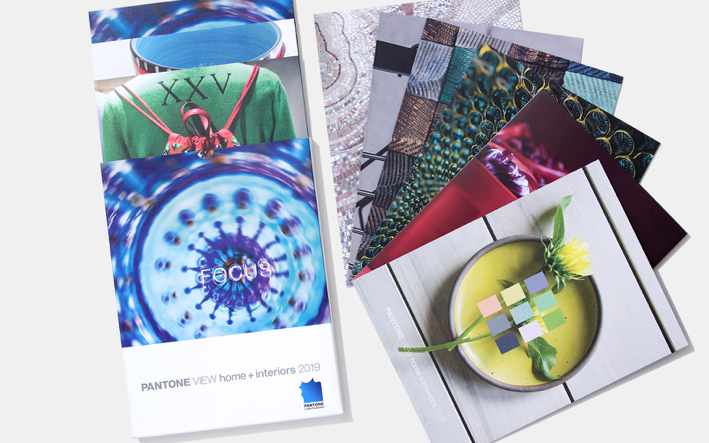
The color Green Pantone 17-5641 Emerald, reflects an age in which we live, as the color in connection to nature. Most often associated with brilliant, precious gemstones, the perception of Emerald is sophisticated and luxurious. Since antiquity, this luminous, magnificent hue has been the color of beauty and new life in many cultures and religions. Also the color of growth, renewal and prosperity, no other color conveys regeneration more than green. For centuries, many countries have chosen green to represent healing and unity.
In the 1990’s this color green begins with Ernie of Sesame Street “it’s not easy being green”. Moving forward ‘green’ is way beyond being a trend. Green has permeated into ‘how we live,’ from the environmental movement to health benefits of being green. The beauty products industry is packaging in green to accentuate the positive effects of the products. The effects of green are being studied in how it has relaxing benefits. “Green is the most abundant hue in nature – the human eye sees more green than any other color in the spectrum,” said Leatrice Eiseman, executive director of the Pantone Color Institute®. “As it has throughout history, multifaceted Emerald continues to sparkle and fascinate. Symbolically, Emerald brings a sense of clarity, renewal and rejuvenation, which is so important in today’s complex world. This powerful and universally appealing tone translates easily to both fashion and home interiors.” We see plants in architecture both inside projects and outside projects, plants effecting furnishings, again the green colors relaxing the human spirit. Greens continue to become more important through the decades with this environmental use.
How and Where derives this color Emerald. Where do we look?
Furnishings, interiors, textiles stones/tiles, ceramics, glassware, lighting/fixtures, advertising, editorials, automotive, signage displays, store windows, graffiti arts, fashion - mainstream to cat walk, highend jewelry, beauty products - makeup, nail polish, even menswear.
Recent Viewings where Emerald shines.
Fashions, contract design, residential, tabletop, housewares, automotive (Chevy convertible design).
Read more about Emerald from Pantone.
Andy Warhol has supplanted the Chinese ink painter Zhang Daqian as the world’s biggest seller at auction.
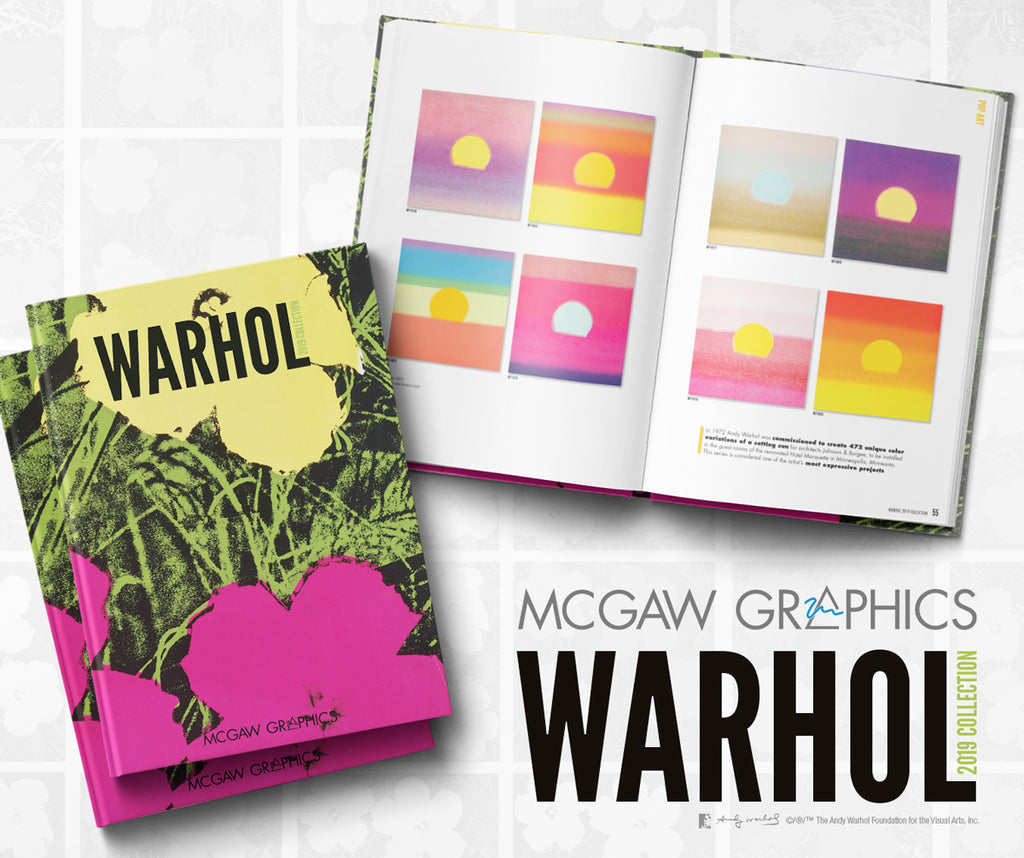
Keep a close eye out for our new Warhol collection later this month! Yes I said it, NEW WARHOL!
Works by the U.S. pop artist fetched $380.3 million in sales in 2012, also beating Pablo Picasso, according to figures compiled by the database Artnet (ART) for Bloomberg News. The two western artists -- who died in 1987 and 1973 respectively -- had totals exceeding those for 80-year-old Gerhard Richter, the top living artist, with Zhang tumbling to fourth place from first.
The rankings reflect the increasing dominance of western postwar and contemporary works in the international art market. Auctions in this category at Sotheby’s, Christie’s International and Phillips de Pury & Co. in New York in November raised a record $1.1 billion, more than twice the total of the previous week’s Impressionist sales, where Picasso traditionally shines.
“Contemporary art is where the dynamic energy is at auctions,” Jonathan P. Binstock, senior adviser in postwar and contemporary art at Citi Private Bank Art Advisory & Finance, said in an interview. “The market is selective and concentrated on works by certain artists. The instant recognizability of masterpieces by Warhol and Richter makes them well suited to performing well.”
The ranking of auction sales for artists born after 1880 shows demand for Warhol barely exceeded the $379.4 million raised in 2011.
Warhol’s all-time auction sales climbed to $2.9 billion in 2012, while Picasso’s reached $5 billion.
Read more from bloomberg.com
Frida and Diego
October 20, 2012 – January 20, 2013
The exhibition Frida & Diego: Passion, Politics and Painting features more than 80 works on paper and paintings by Frida Kahlo and Diego Rivera and more than 60 photographs of the couple, whose shared passion for each other and Mexico's revolutionary culture during the 1920s and 1930s have made them Mexico's most famous artists. Assembled from three distinguished Mexican private collections on Mexican art, the Museo Dolores Olmedo, Colección Gelman, and Galería Arvil, the exhibition provides the opportunity to view almost one quarter of Kahlo's entire body of work and a range of Rivera's painting styles from his early cubist period and studies for his Mexican murals to his portraits and later landscapes. Photographs by Nickolas Muray, Lola Alvarez Bravo, Bernard Silberstein and others help tell the story of one of the most prolific and politically charged couples of the 20th century.
During their lifetime together as a married couple, Rivera achieved international prominence as a muralist, while Kahlo's intimate paintings were embraced by the Surrealist movement and the Mexican art world but not well known in the broader context of art and modernism. Guest-curated at the AGO by OCAD University professor and cultural historian Dot Tuer, Frida & Diego: Passion, Politics and Painting offers a new perspective on their artistic significance for the 21st century: one that encompasses how their paintings reflect both the dramatic story of their lives together and their artistic commitment to the transformative political and cultural values of post-revolutionary Mexico.
Warhol Statue of Liberty
Christie’s notched its largest-ever Postwar/Contemporary evening sale on Wednesday, delivering a stunning $412,253,100 tally. It beat Sotheby’s astonishing $375.2-million contemporary art evening on Tuesday and along the way, set seven artist records and sold all but six of the 73 lots offered for a miniscule buy-in rate of eight percent by lot and seven percent by value. Equally impressive, it beat pre-sale expectations of $289,350,000-$411,800,000.
Six works sold for over $20 million and 55 of the 67 lots that sold hurdled the million-dollar mark. The enormous and almost incomprehensible result ranks second in Christie’s history for any category, trailing only the $491.5-million Impressionist and Modern evening sale in November 2006. Tonight’s result crushed the $247.5-million tally made last November.
Andy Warhol’s experimental 3-D “Statue of Liberty,” executed in silkscreen inks, spray enamel, and graphite from 1962, which sold to a telephone bidder for $43,762,500 (est. on request in the region of $30-40 million). It now ranks as the second most expensive Warhol ever sold at auction, trailing only “Green Car Crash (Green Burniing Car I)” (1963), which sold at the same house in May 2007 for a record $71,720,000. We have a very similar work available, "Statue of Liberty, 1963".
Mark Rothko’s punchy “Black stripe (orange, Gold and Black)” sold to the telephone for $21,362,500 (est. $15-20 million). Jose Mugrabi was one of the underbidders. It last sold at auction at Sotheby’s New York in May 1993 for $882,500.
Sothebys Rothko
A highly coveted painting by Mark Rothko has sold for $75.1 million at auction in New York. "No. 1 (Royal Red and Blue)," which the artist created in 1954, didn't break a record, but it did command the second highest price ever for a Rothko, according to Sotheby's. The record was set back in May "Orange, Red, Yellow" for $86.9 million. Read more.
The auction house had expected the painting to bring in between $35 million and $50 million. The painting had been in the collection of former Sotheby's president John Marion since 1982, according to the Wall Street Journal. The buyer's identity hasn't been disclosed.
In May, another Rothko painting, "Orange, Red, Yellow," sold for $87 million at a Christie's auction, setting a record for the artist.
Keep on the alert as we just might be releasing some new Rothko's soon ;-0
"If I mention the name Versailles, you might think of the elaborate chateau, with mirrored halls, crystal chandeliers and vast rooms filled with treasures. Indeed that does describe the palace. But in 2006 Versailles revealed its most satisfying hidden treasure, and opened to the public a place which I prefer to all the splendors of the palace: the idyllic Hameau of the Queen Marie Antoinette." This is just an exerpt from the writtings from Dawne Polis. You know her as a Photographer, you should read her articles and all accompanied by her photos.
L'hameau de la Reine Marie Antoinette
Gerberoy, a fairy tale village in France
L'hameau de la Reine Marie Antoinette
UPDATE 9/18/12 - Many smaller same day orders are going out today.
UPDATE 9/17/12 - Warehouse staff put in a full weekend of work and we are proud to notify you that we are nearly caught up. We should be back on track by mid week.
We have moved the warehouse and are back to shipping. Due to the downtime, we are backlogged with orders, a good problem to have. Warehouse staff is working feverishly to complete orders as quickly as possible. Thanks for your patience, YOUR ORDER IS ON THE WAY! Contact our customer service department to check the status.
Shipping has resumed
Join us on: